
A landscaping website is the front door to every project inquiry, maintenance contract, and design consultation your company earns online. If you run a landscaping business anywhere in North Texas or Oklahoma, you already know that prospective clients judge your operation before they ever pick up the phone. They scroll through project photos, scan your service list, check whether you cover their neighborhood, and decide in about fifteen seconds whether you look like the crew that can handle their property. The question is whether your current site gives them a reason to stay or sends them back to the search results.
LuperIQ builds landscaping websites on a platform designed for service businesses that depend on visual proof, local trust, and efficient scheduling. That means dedicated gallery pages, service-area targeting, online quote capture, seasonal content, and a backend that supports the way real landscaping operations actually run — from the first property walkthrough to the recurring maintenance agreement. This page covers the full scope of what a strong landscaping website needs and how the platform supports each piece.
Why a Landscaping Website Needs More Than a Pretty Homepage
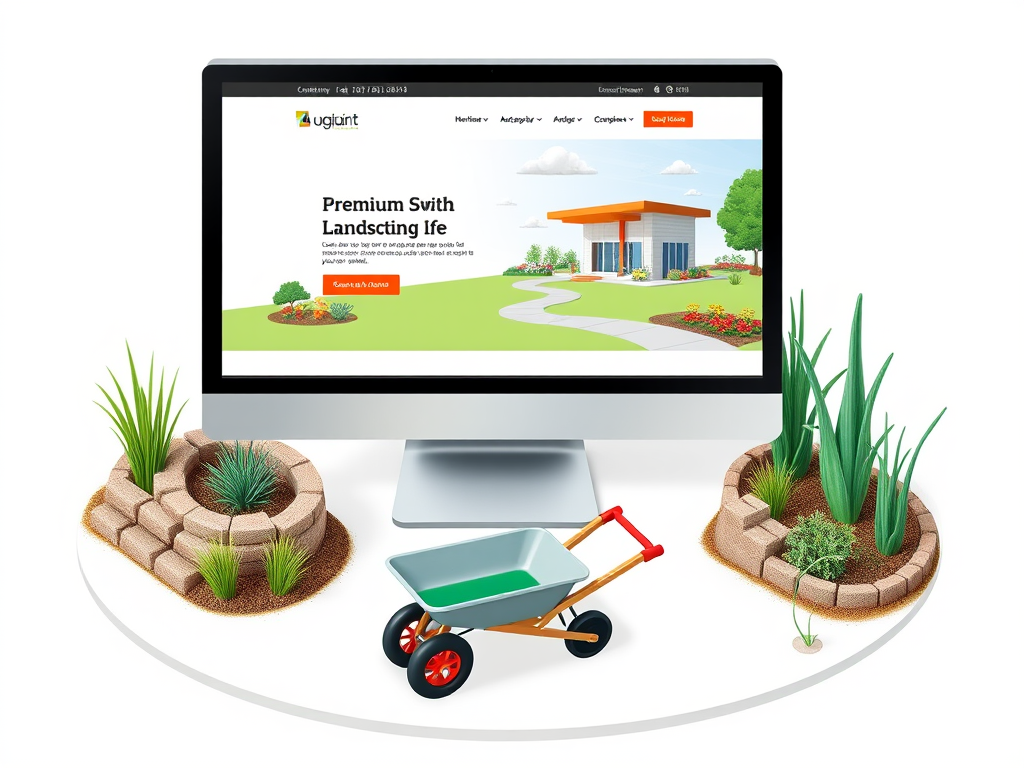
Plenty of landscaping companies have a decent homepage with a hero image and a phone number. That might have worked ten years ago. Today, the landscaping companies winning local search have structured sites with separate pages for each core service, a gallery that shows real completed work, neighborhood-specific landing pages, and a quote request flow that captures project scope before anyone makes a call.
The difference between a static brochure site and a revenue-generating landscaping website shows up in three places: how many qualified inquiries it produces each month, how clearly it communicates the company's service range, and how well it performs in local search results when homeowners search for things like landscape design near me, lawn maintenance in Southlake, or commercial landscaping services Fort Worth. Structure drives all three outcomes.
A landscaping website also has to serve multiple buyer types simultaneously. The homeowner looking for weekly mowing evaluates your site very differently than the property manager sourcing a design-build contractor for a new HOA common area. If every service is crammed into a single paragraph, both visitors leave confused. Dedicated service pages, honest portfolio work, and clear calls to action solve that problem.
Organizing Services So Every Landscaping Visitor Finds the Right Page
Most landscaping companies offer a wider service range than their website reflects. A strong landscaping website separates these into distinct, indexable pages so that search engines understand your full scope and visitors land directly on the service they care about. Consider how different these search intents are:
- Lawn maintenance and mowing programs for residential properties
- Landscape design and installation for new construction or renovations
- Hardscape construction including patios, retaining walls, walkways, and fire pits
- Irrigation system design, installation, and seasonal adjustments
- Drainage solutions for clay-heavy North Texas soil and Oklahoma red dirt
- Seasonal color rotations and ornamental bed maintenance
- Tree and shrub care including pruning, removal, and health assessments
- Commercial landscaping and property maintenance contracts
Each of those service types represents a different search query, a different buyer mindset, and a different price point. When each one has its own page with relevant photos, clear descriptions, and a focused call to action, your landscaping website works harder in organic search and converts visitors more efficiently. The LuperIQ platform supports unlimited service pages with structured layouts, image galleries, and built-in SEO controls on every page.
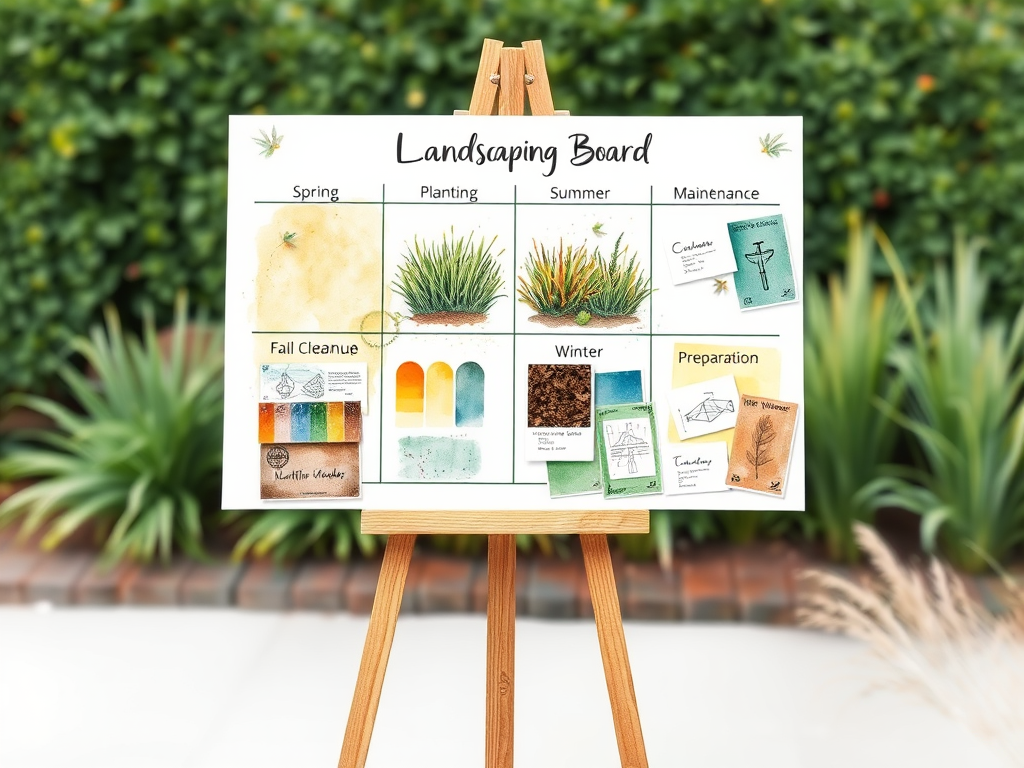
Portfolio Galleries That Prove Your Landscaping Website Means Business
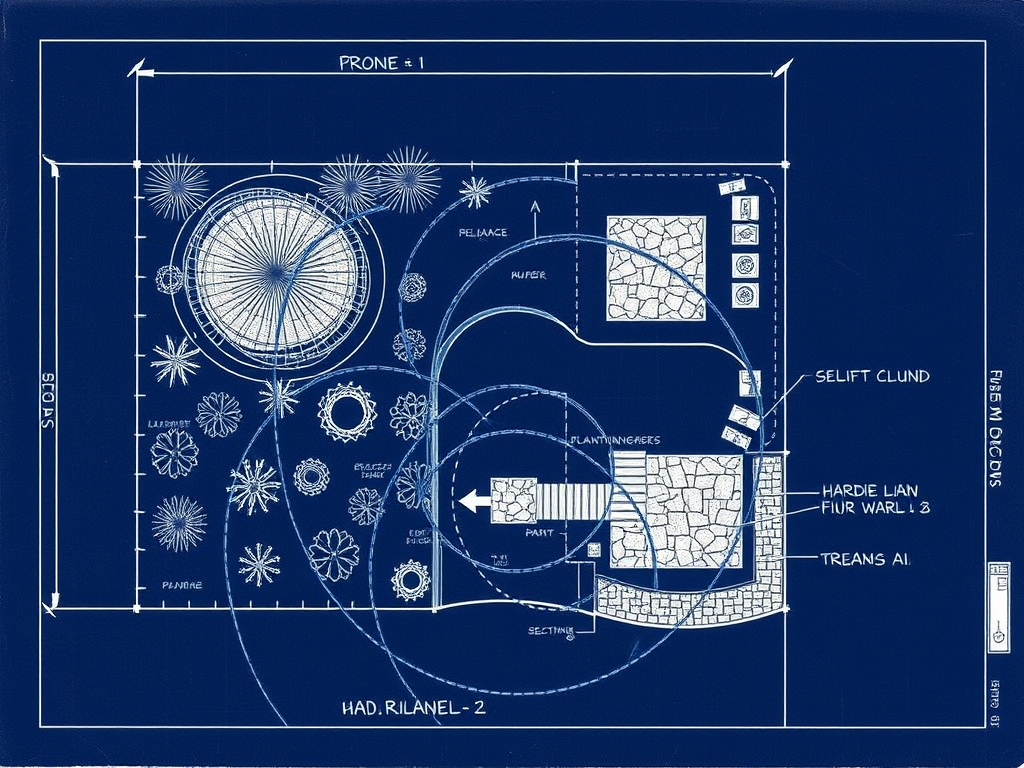
In landscaping, the gallery is not decoration — it is the sales conversation. Before-and-after project photos do more persuasion work than any paragraph of marketing copy. The strongest landscaping websites organize galleries by project type: residential design-build, hardscape installations, drainage solutions, commercial maintenance, seasonal color, and irrigation work. That way a visitor interested in a patio project sees patio projects, not an unrelated jumble of mowing photos.
LuperIQ's media management system supports high-resolution uploads with automatic WebP conversion for fast loading, caption fields for SEO-rich descriptions, and gallery layouts that showcase project sequences. Every gallery image can carry alt text containing your focus keywords, which means your project photos contribute directly to search visibility. If you have fifty completed projects worth showing, your landscaping website should make every one of them findable and impressive.
Regional detail matters here too. A portfolio that shows work in Plano, Frisco, Edmond, and Norman tells visitors you operate in their area and understand local soil conditions, HOA preferences, and climate constraints. Geo-tagged portfolio entries are one of the strongest local trust signals a landscaping company can build.
Local SEO Architecture for Landscaping Websites That Rank in Every Service Area
Landscaping is inherently local. Nobody hires a lawn crew from three states away. That means your landscaping website needs to be built with local search architecture from the ground up — not bolted on as an afterthought. The LuperIQ platform supports service-area pages, which are individual landing pages targeting specific cities, neighborhoods, or zip codes where you operate.
A landscaping company serving the Dallas-Fort Worth metroplex might build pages for Highland Park, University Park, Keller, Southlake, Colleyville, Grapevine, McKinney, Allen, and Prosper — each with locally relevant content about the soil conditions, common landscape styles, HOA requirements, and seasonal timing specific to that area. An Oklahoma operator might build pages for Edmond, Norman, Yukon, Moore, Broken Arrow, and Bixby. Each page earns its own spot in local search results.
This is the difference between hoping your homepage ranks for every city and building a site structure that search engines can actually match to hyper-local queries. The platform's SEO module handles meta titles, descriptions, focus keywords, and structured data on every service-area page, so each one is fully optimized without manual guesswork. Read more about how this works at /landscaping-service-area-pages/ and /landscaping-seo/ for deeper detail on each strategy.
Quote Requests and Scheduling That Keep the Landscaping Pipeline Full
Most landscaping conversions start with a quote request, not a credit card. A landscaping website that only offers a phone number and a generic contact form loses leads who want to describe their project, upload a photo of their yard, or request a walkthrough at a specific time. The platform's booking module lets you build quote request forms that capture property size, service type, project description, preferred timeline, and contact details — giving your estimator real information before the first site visit.
For recurring maintenance customers, scheduling integration means clients can view their service calendar, request add-ons like seasonal color installs or irrigation blowouts, and communicate through a customer portal instead of playing phone tag. That kind of follow-up infrastructure turns a one-time cleanup job into a twelve-month maintenance contract, which is where the real revenue stability lives for landscaping businesses.
The customer portal at /modules/customer-portal/ supports project status updates, invoice viewing, and direct messaging. For landscaping companies running multiple crews across a metro area, this reduces the office phone volume and gives property owners transparency into when their next service is scheduled.
Seasonal Content Strategy That Keeps a Landscaping Website Relevant Year-Round
Landscaping in North Texas and Oklahoma is seasonal in ways that affect both the work and the search traffic. Spring brings the rush of design consultations, sod installations, and bed prep. Summer shifts to irrigation efficiency, heat-tolerant plant selections, and drought management. Fall means aeration, overseeding, leaf removal, and tree trimming. Winter is the time for hardscape projects, drainage corrections, and planning for the next growing season.
A smart landscaping website publishes content that matches these cycles. Blog posts about when to aerate Bermuda grass in the DFW area, guides on choosing between Zoysia and St. Augustine for Oklahoma clay soil, or tips on winterizing irrigation systems all drive organic traffic from homeowners actively searching for seasonal advice. That traffic builds authority, earns backlinks, and feeds your quote pipeline.
- Spring: Design consultations, sod installation, bed prep, seasonal color planting, irrigation startups
- Summer: Drought management, irrigation audits, heat-tolerant plantings, mosquito treatment prep
- Fall: Aeration, overseeding, leaf removal, tree trimming, drainage assessments
- Winter: Hardscape construction, landscape planning, irrigation winterization, equipment maintenance
The LuperIQ blog module supports scheduled publishing, category tagging, and SEO controls so your seasonal content goes live at exactly the right time. Combined with email marketing through the platform, you can notify past customers about seasonal services before they think to search for them elsewhere.
Design and Visual Identity for a Landscaping Website That Feels Premium
Landscaping companies sell transformation. The website has to reflect that same sense of quality and attention to detail. A site that looks like it was built from a generic template in 2018 sends the wrong signal to a homeowner about to spend five or fifteen thousand dollars on their outdoor space. The visual identity of your landscaping website — typography, color palette, image presentation, whitespace — all communicate whether you are a premium operation or a budget crew.
LuperIQ's Theme Studio gives landscaping businesses control over layout, typography, color schemes, and responsive behavior without writing code. You can build a dark, elegant portfolio presentation for high-end design-build work or a clean, bright layout for residential maintenance services. The design adapts to mobile screens automatically, which matters because most homeowners searching for landscaping services in Fort Worth or Oklahoma City are doing it from their phone while standing in the yard they want fixed.
For deeper design guidance specific to landscaping companies, see /landscaping-website-design/ which covers visual hierarchy, portfolio presentation patterns, mobile UX considerations, and trust signal placement in detail.
Marketing Integration That Turns a Landscaping Website Into a Growth Engine
A landscaping website that just sits there waiting for visitors is a digital billboard. A landscaping website connected to email campaigns, review collection, seasonal promotions, and conversion tracking is a growth engine. The platform supports email marketing campaigns that let you segment by service type — so your irrigation maintenance customers get a winterization reminder in October, while your design-build prospects get a spring planning guide in February.
Review generation is equally critical. Landscaping companies with strong Google Business Profile reviews consistently outrank competitors in the local map pack. The platform's notification system can trigger review requests after completed projects, helping you build social proof at the pace your work deserves. Combined with before-and-after gallery updates, every completed project becomes marketing content.
For a deeper dive into how SEO, seasonal campaigns, visual proof, and follow-up systems work together for landscaping companies, see /landscaping-marketing/ which covers the full marketing stack.
What a Complete Landscaping Website Actually Includes
Pulling it all together, here is what a fully built landscaping website on the LuperIQ platform includes. This is not a wish list — these are capabilities the platform supports today:
- Dedicated homepage with hero imagery, trust signals, and primary CTA for quote requests
- Individual service pages for maintenance, design, hardscape, irrigation, drainage, tree care, and commercial work
- Portfolio gallery organized by project type with before-and-after sequences and WebP optimization
- Service-area landing pages targeting each city and neighborhood in your coverage zone
- Blog with seasonal content, lawn care guides, and project spotlights for organic traffic
- Quote request forms that capture property details, service type, and preferred timeline
- Customer portal for recurring clients to view schedules, invoices, and project updates
- SEO controls on every page including meta titles, descriptions, focus keywords, and structured data
- Email marketing for seasonal campaigns, service reminders, and review requests
- Mobile-responsive design that loads fast and looks professional on every device
- Theme Studio for visual customization without code changes
- Analytics integration for tracking traffic, conversions, and lead sources
Every piece connects. The gallery builds trust that drives quote requests. The service-area pages bring in local traffic. The blog earns organic authority. The email campaigns re-engage past customers. The customer portal reduces churn. None of these pieces work in isolation, and a landscaping website built on disconnected tools always has gaps between them.
Frequently Asked Questions About Building a Landscaping Website
How many pages should a landscaping website have?
What makes a landscaping website rank well in local search?
Should a landscaping website show pricing?
How important are before-and-after photos on a landscaping website?
Can a landscaping website handle quote requests online?
How does a landscaping website support recurring maintenance customers?
What is the best way to organize a landscaping portfolio gallery?
How long does it take to build a landscaping website on LuperIQ?
Your landscaping company deserves a website that works as hard as your crews do. Whether you are a solo operator building your first real web presence or an established company replacing an outdated site, the LuperIQ platform gives you the structure, design control, and marketing tools to compete in local search and convert more property walkthroughs into signed contracts.