
Landscaping Marketing That Fills Your Schedule With the Right Projects
Landscaping marketing is the engine that turns a well-built website into a steady stream of qualified leads, maintenance contracts, and design consultations. Having a great portfolio and clean service pages matters — but without a system that drives traffic, captures attention, and follows up with prospects, even the best landscaping website sits idle. The companies that grow consistently are the ones that combine organic search, seasonal campaigns, visual proof, email follow-up, and conversion tracking into a coordinated strategy that works twelve months a year.
This page covers the full landscaping marketing stack that the LuperIQ platform supports — from the SEO foundation at /landscaping-seo/ through seasonal email campaigns, review generation, before-and-after content strategies, and tracking systems that show which channels actually produce revenue. The pillar overview at /landscaping-website/ covers the broader platform capabilities. This page focuses on turning that platform into a client acquisition machine.
Organic Search as the Backbone of Landscaping Marketing
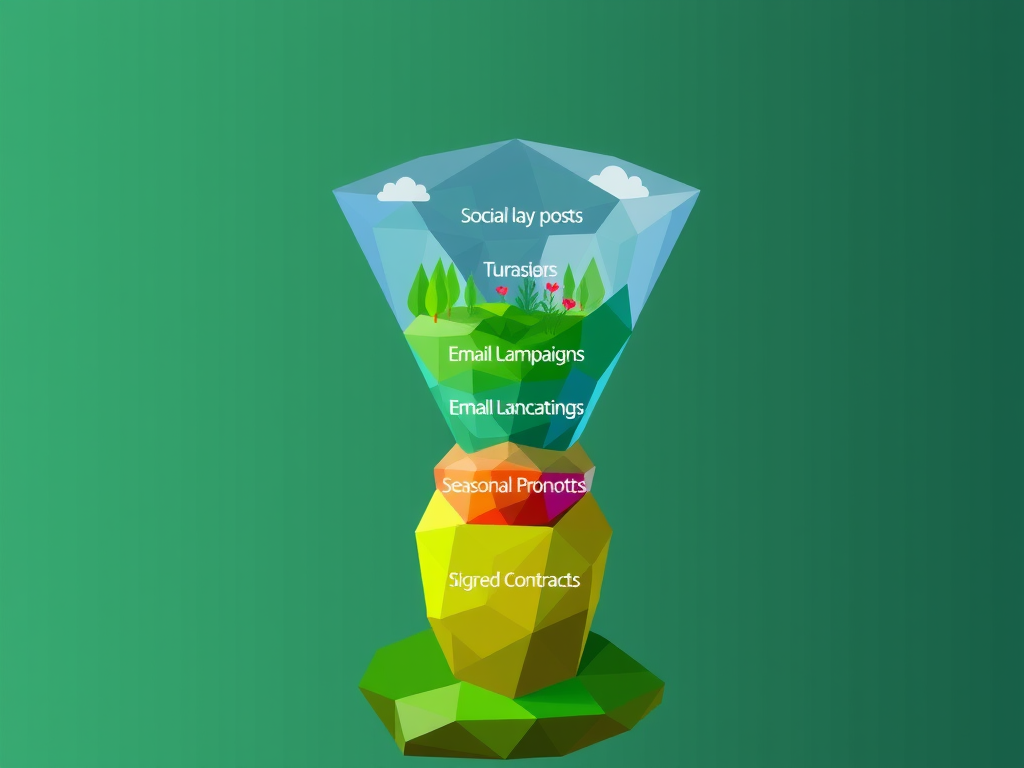
The most cost-effective landscaping marketing channel over time is organic search. When a homeowner searches for patio installation near me or lawn care company in Edmond, ranking on the first page means free, high-intent traffic every single day without paying per click. The cost of building that organic presence is front-loaded — creating service pages, area pages, blog content, and gallery optimization — but the returns compound month after month as the site gains authority.
Organic search works for landscaping because the searches are inherently local and service-specific. A homeowner searching for retaining wall contractor McKinney has a project in mind and a location. When your website has a dedicated page that matches that query with relevant content and portfolio proof, the conversion path from search result to quote request is direct and natural.
The full organic strategy is covered at /landscaping-seo/ including portfolio image optimization, service-area pages at /landscaping-service-area-pages/, and technical SEO foundations. Organic search should be the bedrock of every landscaping marketing plan because it produces leads while you sleep.
Seasonal Campaigns That Match the Landscaping Marketing Calendar
Landscaping is one of the most seasonal service industries, and the marketing strategy needs to reflect that. The campaigns that generate revenue in March look nothing like the campaigns that work in October. Effective landscaping marketing anticipates these cycles and reaches prospects at the exact moment they are making decisions.
A practical seasonal marketing calendar for North Texas and Oklahoma landscaping companies:
- February-March: Spring design consultations, sod installation bookings, irrigation startup scheduling, pre-season maintenance renewals
- April-May: Seasonal color installation promotions, mulch refresh campaigns, drainage assessments before summer storms
- June-August: Irrigation efficiency audits, drought-tolerant planting guides, mosquito treatment bundling, summer maintenance upsells
- September-October: Aeration and overseeding campaigns, fall cleanup packages, tree trimming promotions, holiday lighting pre-booking
- November-December: Hardscape project consultations for winter construction, irrigation winterization reminders, year-end maintenance contract renewals
- January: Planning guides for the coming year, early-bird design consultation offers, portfolio recap of last year's completed work
The LuperIQ email marketing module supports campaign scheduling, audience segmentation by service type, and template design so each seasonal campaign reaches the right customers at the right time. A maintenance customer gets the aeration reminder. A past design client gets the hardscape consultation offer. Segmentation prevents the spray-and-pray approach that trains customers to ignore your emails.

Visual Proof as the Most Powerful Landscaping Marketing Asset
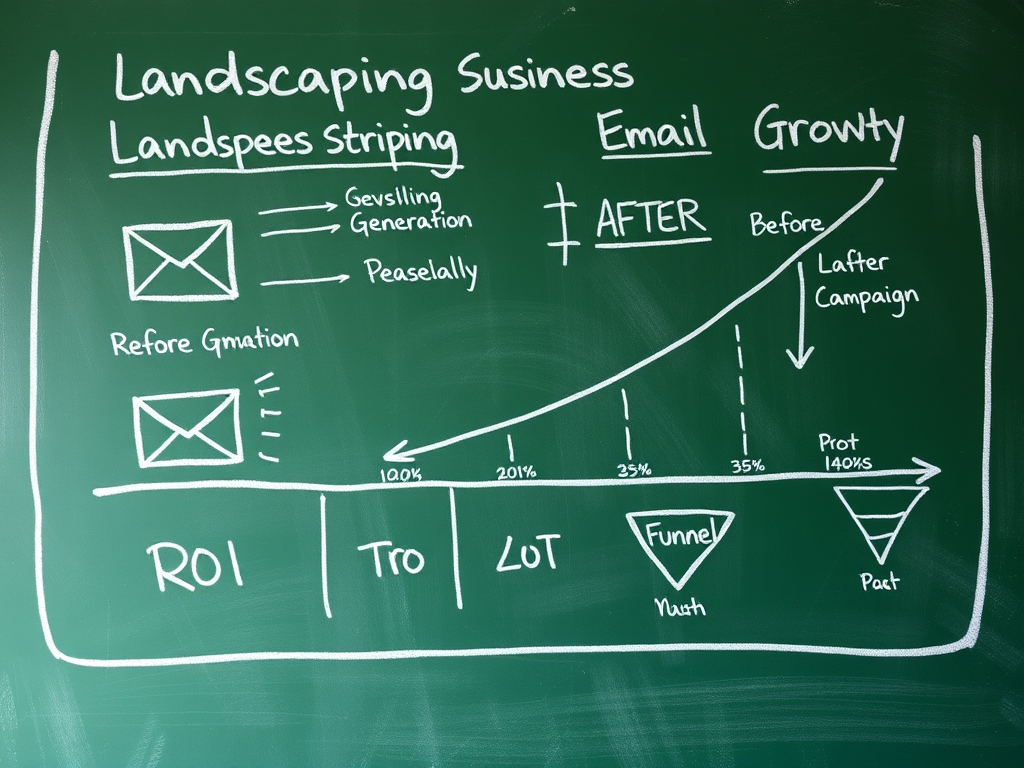
No other marketing content converts as reliably for landscaping companies as before-and-after project documentation. A dramatic transformation — an overgrown yard turned into a manicured landscape, a bare concrete slab replaced with a flagstone patio and outdoor kitchen, a flooded backyard corrected with proper grading and French drains — tells the entire sales story in two photos.
The marketing strategy around visual proof has multiple layers. The project photos live on your website portfolio and service pages for organic search. Selected transformations become blog posts with detailed project narratives for long-tail keyword traffic. The most striking before-and-after pairs get shared on social media where neighbors see the work and recognize the street. The same images appear in email campaigns targeting similar service types.
The key discipline is documenting every significant project from start to finish. Crews should photograph the property before work begins, during key milestones, and after completion. That ten-minute investment in documentation creates marketing content that works for years. LuperIQ's media manager organizes these assets by project type, city, and date so they are easy to deploy across all marketing channels.
Email and SMS Follow-Up That Keeps Landscaping Clients Engaged
The most profitable customer in landscaping is the one who already hired you. Retaining existing maintenance contracts, upselling seasonal services, and generating referrals from satisfied customers costs a fraction of acquiring new leads through advertising. Email and SMS follow-up systems make this retention and expansion happen automatically.
Effective landscaping marketing follow-up sequences include:
- Post-project review request sent 48 hours after job completion — this is the highest-conversion window for Google reviews
- Seasonal service reminders timed to local conditions — aeration in September for North Texas Bermuda, spring bed prep in late February
- Annual maintenance contract renewal notices sent 30 days before expiration with a renewal incentive
- Referral requests sent after completed projects with an easy share mechanism for friends and neighbors
- Dormant client reactivation campaigns targeting customers who have not booked in 6+ months
- Monthly or quarterly newsletters with project highlights, seasonal tips, and special offers
The LuperIQ platform supports automated email sequences, customer segmentation by service history, and notification triggers based on project milestones. This means the review request goes out automatically after every job closes, the renewal notice sends itself 30 days early, and the seasonal campaign reaches the right audience at the right time without manual effort from the office.
Review Generation and Reputation That Drive Landscaping Marketing Results
Google reviews are both a ranking factor and a conversion factor for landscaping marketing. A company with 150 reviews and a 4.9 rating dominates the local map pack and gets more clicks than competitors with fewer reviews — even those who technically rank higher in organic results. Reviews are the social proof that tips hesitant homeowners from considering your company to actually requesting a quote.
The review strategy that compounds over time is simple in concept but requires discipline: ask every customer for a review after every completed project. Send the request within 48 hours while the transformation is still fresh. Include a direct link to your Google Business Profile review form so the process takes less than two minutes. Respond to every review — positive ones with gratitude and specifics, negative ones with professionalism and a resolution offer.
Over twelve months, a landscaping company completing 200 projects that asks for reviews on every one can realistically collect 60 to 80 new reviews. That velocity signals freshness and volume to Google while building the reputation wall that makes competitors' paid advertising less effective. The platform's automated review request system handles the timing and delivery so the office staff does not have to remember.
Conversion Tracking That Shows Which Landscaping Marketing Channels Work
The difference between landscaping marketing that wastes money and marketing that builds a business is measurement. Without conversion tracking, you cannot tell whether the SEO investment is producing more leads than the paid ads, whether the spring email campaign generated more consultations than the fall one, or whether the referral program is worth the incentive cost.
The essential tracking points for landscaping marketing are:
- Quote request form submissions tracked by source — organic search, email campaign, social media, or direct traffic
- Phone calls tracked by landing page so you know which service or area page generated the call
- Email campaign metrics — open rates, click rates, and quote requests attributed to each campaign
- Google Business Profile insights — search queries, direction requests, phone calls, and website clicks
- Review velocity — new reviews per month and average rating trend over time
- Customer lifetime value by acquisition source — which marketing channel produces the highest-value clients over time
The LuperIQ analytics integration tracks form submissions and page-level traffic data. Combined with Google Business Profile insights and email campaign reporting, you get a complete picture of which landscaping marketing efforts deserve more investment and which should be cut. This prevents the common trap of spending money on channels that feel productive but do not actually produce revenue.
Frequently Asked Questions About Landscaping Marketing
What is the most effective marketing channel for landscaping companies?
How much should a landscaping company spend on marketing?
When is the best time to launch a landscaping marketing campaign?
Do before-and-after photos really help with landscaping marketing?
How can a landscaping company get more Google reviews?
Should a landscaping company use social media marketing?
How do email campaigns work for landscaping businesses?
Landscaping marketing is not a single tactic — it is a coordinated system where organic search brings in new visitors, visual proof converts them to leads, email follow-up retains and expands existing relationships, reviews build compounding authority, and tracking ensures every dollar works toward growth. Build on the website foundation at /landscaping-website/, strengthen the design at /landscaping-website-design/, and layer in the search strategy at /landscaping-seo/ to create a marketing system that performs in every season.